Understanding the Eisenhower Matrix
The Eisenhower Matrix is a productivity method that helps people prioritize tasks by separating what is urgent from what is important. By organizing tasks into four categories, the system helps individuals focus on meaningful work instead of reacting to distractions.
How the Eisenhower Matrix Works: The Urgent vs Important Productivity Method
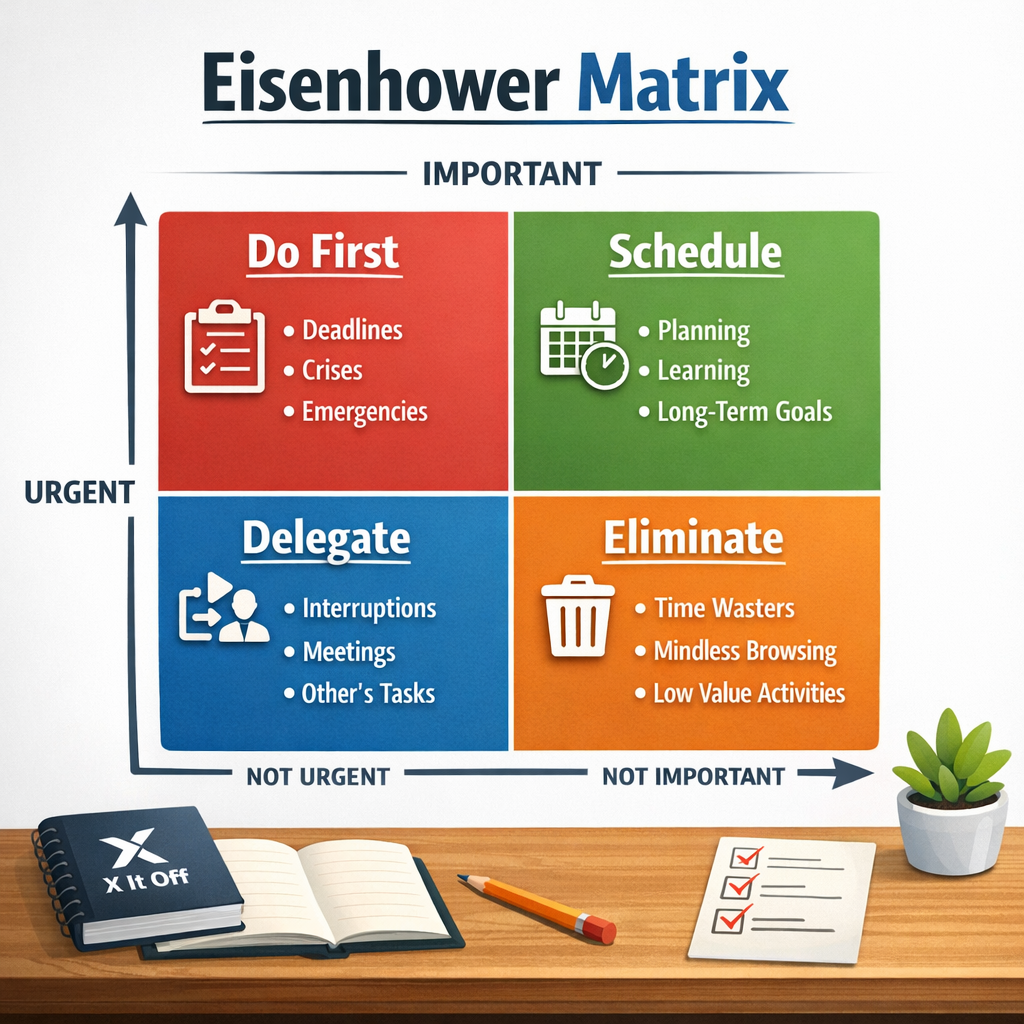
The Eisenhower Matrix is one of the most well known productivity methods for prioritizing tasks and making better decisions about how to spend your time.
Instead of simply listing everything that needs to be done, the Eisenhower Matrix separates tasks based on two factors:
Urgency
Importance
By evaluating tasks through these two lenses, people can identify which activities deserve their attention and which ones should be postponed, delegated, or eliminated.
This simple framework helps reduce overwhelm and prevents people from constantly reacting to tasks that feel urgent but are not truly important.
Who Created the Eisenhower Matrix?
The Eisenhower Matrix is named after Dwight D. Eisenhower, the 34th President of the United States and a former Supreme Commander of Allied Forces during World War II.
Eisenhower was known for his ability to manage enormous responsibilities and complex decisions. His approach to prioritization was summarized in a famous principle:
“What is important is seldom urgent, and what is urgent is seldom important.”
This idea eventually evolved into the productivity framework now known as the Eisenhower Matrix.
You can read more about the concept on the Eisenhower Matrix page.
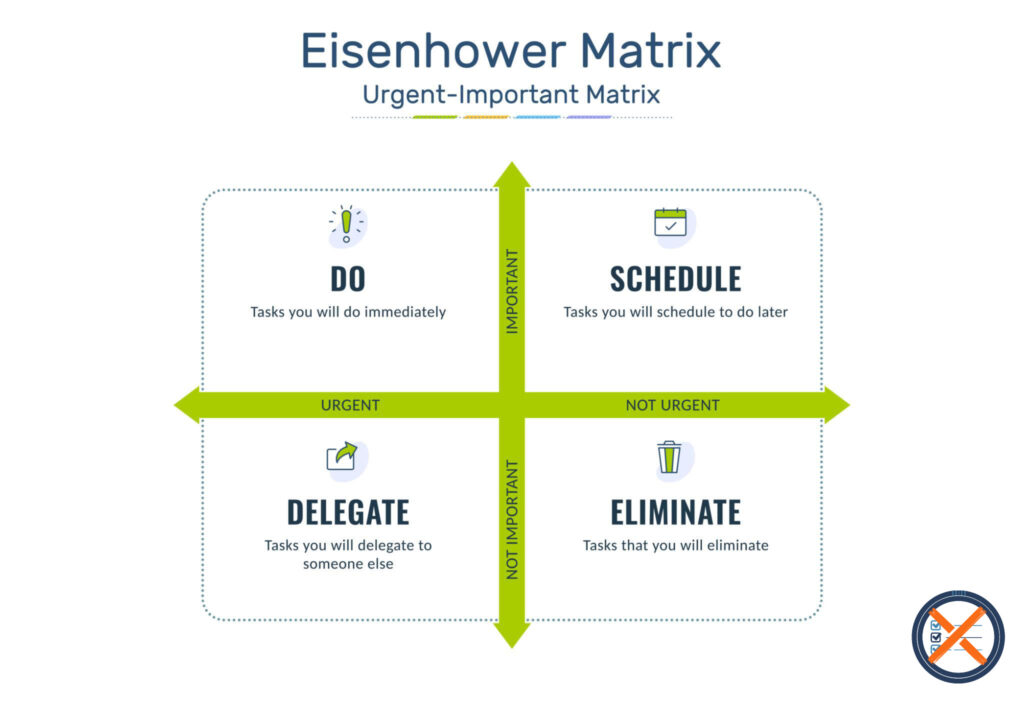
How the Eisenhower Matrix Works
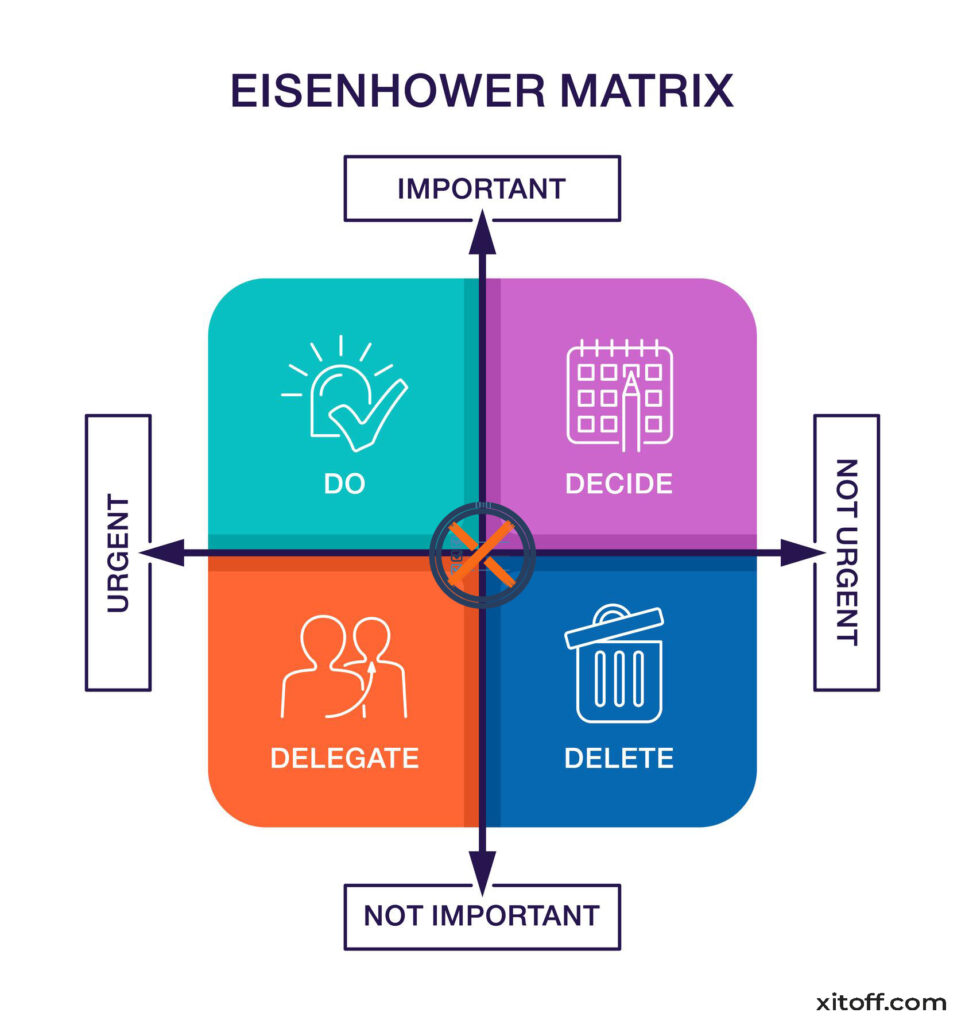
The Eisenhower Matrix divides tasks into four categories based on urgency and importance.
These categories are often represented as four quadrants.
Quadrant 1 — Urgent and Important
These tasks require immediate attention and have serious consequences if ignored.
Examples include:
Meeting critical deadlines
Handling emergencies
Solving urgent problems
These tasks should be completed as soon as possible.
Quadrant 2 — Important but Not Urgent
This quadrant contains the activities that create long term progress and meaningful results.
Examples include:
Planning
Learning new skills
Working toward long term goals
Building systems and habits
Many productivity experts believe this is the most important quadrant because it focuses on strategic progress instead of constant urgency.
Quadrant 3 — Urgent but Not Important
These tasks feel urgent but do not significantly contribute to long term goals.
Examples include:
Interruptions
Some meetings
Minor requests from others
Non critical communications
Whenever possible, these tasks can be delegated or minimized.
Quadrant 4 — Not Urgent and Not Important
These tasks provide little or no real value.
Examples include:
Mindless browsing
Excessive social media
Busy work with no clear purpose
The goal of the Eisenhower Matrix is to reduce time spent in this quadrant.
Why the Eisenhower Matrix Works
The Eisenhower Matrix works because it forces people to evaluate their tasks more intentionally.
Many people spend most of their day reacting to what feels urgent.
However, urgency does not always equal importance.
By separating these two ideas, the Eisenhower Matrix helps people:
Focus on meaningful work
Avoid unnecessary distractions
Make better decisions about their time
This clarity makes it easier to prioritize the work that actually moves projects forward.
Limitations of the Eisenhower Matrix
While the Eisenhower Matrix is helpful for prioritization, it does not fully solve the problem of execution.
Even after identifying which tasks are important, people may still struggle with:
Starting difficult work
Maintaining focus
Following through to completion
This is where many productivity systems fall short.
They help people decide what to do, but they do not necessarily help them begin or finish the task.
How X It Off Approaches Productivity Differently
Prioritization methods like the Eisenhower Matrix help people decide what matters most.
But many people struggle with something deeper than prioritization.
They struggle with starting tasks and following through.
Execution systems like X It Off focus on reducing psychological resistance and guiding people through the process of completing meaningful work.
Instead of simply organizing tasks by urgency or importance, the system helps users take action and maintain progress until the task is finished.
Prioritization systems help decide what to do.
Execution systems help ensure it actually gets done.
Both approaches can work together depending on how someone prefers to manage their work.
Is the Eisenhower Matrix Effective?
For many people, the Eisenhower Matrix is an effective way to organize tasks and clarify priorities.
By separating urgent responsibilities from long term priorities, the system helps people avoid spending all their time reacting to immediate demands.
However, prioritization alone does not always lead to action.
The most effective productivity systems combine clear prioritization with structured execution.
Final Thoughts
The Eisenhower Matrix remains one of the simplest frameworks for understanding how to prioritize work.
By organizing tasks into four categories based on urgency and importance, it helps people focus on what truly matters.
For many individuals, productivity begins with clarity about what deserves attention.
Once that clarity exists, the next challenge becomes taking action and moving the work forward.
Frequently Asked Questions About the Eisenhower Matrix
What is the Eisenhower Matrix?
The Eisenhower Matrix is a productivity framework that organizes tasks into four categories based on urgency and importance. It helps people decide which tasks to complete immediately, schedule for later, delegate to others, or eliminate entirely.
Why is it called the Eisenhower Matrix?
The method is named after Dwight D. Eisenhower, who emphasized the difference between urgent tasks and important tasks while managing large responsibilities during his leadership.
What are the four quadrants of the Eisenhower Matrix?
The four quadrants are:
Urgent and Important
Important but Not Urgent
Urgent but Not Important
Not Urgent and Not Important
Each category helps guide decisions about how tasks should be handled.
Is the Eisenhower Matrix good for productivity?
Yes. The Eisenhower Matrix helps people focus on meaningful work by separating urgent distractions from important priorities.
What is the difference between urgent and important tasks?
Urgent tasks require immediate attention, while important tasks contribute to long term goals and meaningful progress.
Can the Eisenhower Matrix help reduce procrastination?
It can help clarify priorities, but it does not always solve the psychological resistance that prevents people from starting difficult tasks.
Does X It Off use the Eisenhower Matrix?
Yes. Systems like X It Off can incorporate prioritization ideas similar to the Eisenhower Matrix while also guiding users through execution and task completion.
Related Productivity Methods
Explore other productivity systems:
• What Is the Pomodoro Technique
• What Is Time Blocking
• What Is Getting Things Done (GTD)
• What Is Deep Work