Why Procrastination Happens Even When You Want to Act
Procrastination is rarely about laziness. It usually happens when tasks feel unclear, overwhelming, or mentally heavy. Understanding the psychology behind procrastination makes it easier to remove friction and finally move forward.
The Real Psychology Behind Procrastination
Why Procrastination Happens
Why do people procrastinate even when they genuinely want to finish something important? Procrastination is one of the most common struggles people face when trying to accomplish meaningful goals. Even when someone genuinely wants to complete a task, they may still delay starting or avoid finishing it.
This behavior often feels frustrating or confusing. People may blame themselves for lacking discipline or motivation, but procrastination is rarely caused by laziness.
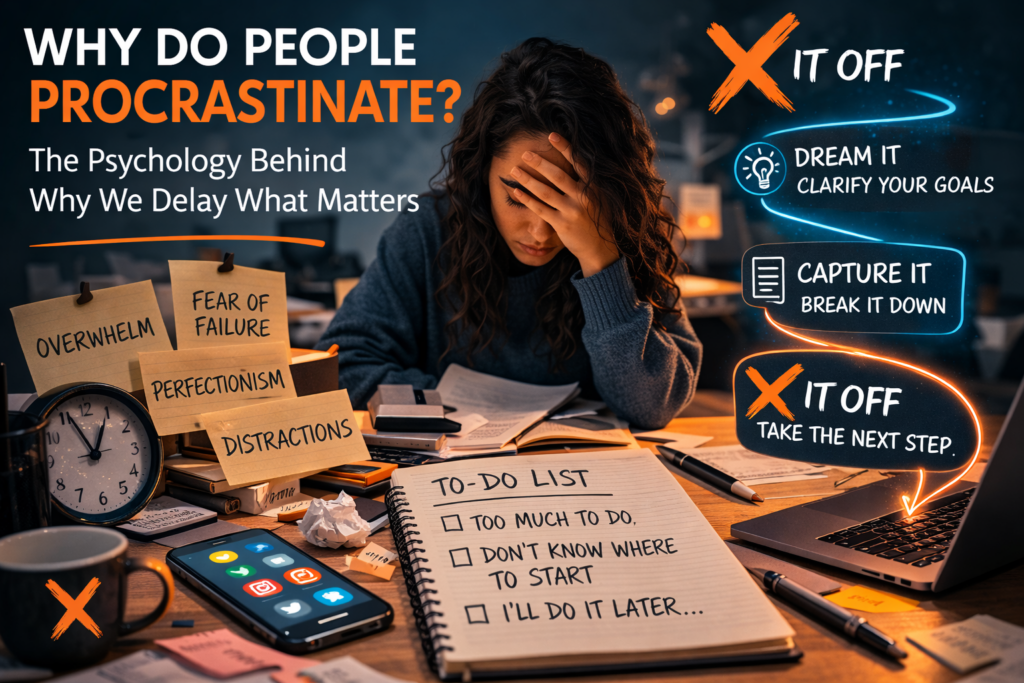
Instead, procrastination is usually a response to mental friction, uncertainty, and emotional resistance.
Understanding why people procrastinate is the first step toward solving the problem.
Many people search for answers to why people procrastinate, especially when they want to change but still struggle to start.
In This Guide
• Why People Procrastinate Even When They Want to Change
• The Brain Naturally Avoids Mental Friction
• Starting Tasks Is Often Harder Than Finishing
• Why Motivation Is Not a Reliable Solution
• How Overwhelm and Task Ambiguity Increase Procrastination
• Why Traditional Productivity Advice Often Fails
• The Real Solution to Procrastination
• Why Structured Execution Systems Work
• Why Understanding Procrastination Changes How You Work
• Frequently Asked Questions
Why People Procrastinate Even When They Want to Change
Procrastination Is Often Misunderstood
Most productivity advice assumes that procrastination happens because people are not motivated enough.
In reality, many people procrastinate despite wanting to take action.
They may think about the task frequently, feel pressure to complete it, and even plan to start soon. Yet when the moment arrives to begin, something inside the brain hesitates.
This hesitation is not random. It is usually the result of several psychological factors working together.
The Brain Naturally Avoids Mental Friction
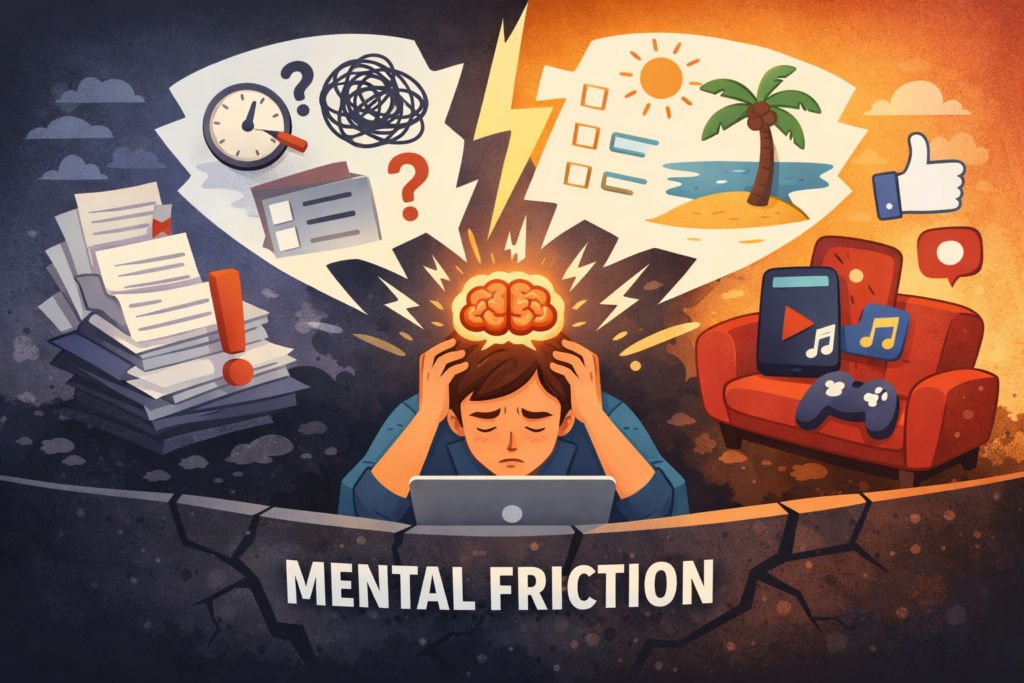
One of the primary reasons people procrastinate is that the brain naturally tries to avoid mental friction.
Research in behavioral psychology shows that people tend to avoid tasks that produce mental friction or emotional discomfort.
Friction occurs when a task feels unclear, overwhelming, emotionally uncomfortable, or cognitively demanding.
For example, if the next step in a project is vague or complicated, the brain must spend extra energy figuring out where to begin. That uncertainty creates resistance.
Instead of pushing through that resistance, the brain often looks for something easier to do.
Opening a different project, checking messages, or focusing on a smaller task provides quick relief from that friction.
Over time, this pattern becomes what we recognize as procrastination.
Starting Tasks Is Often Harder Than Finishing Them
Many people assume that completing a task is the hardest part of productivity.
In reality, the hardest moment is often the very beginning.
Starting requires making decisions, confronting uncertainty, and committing energy before any progress has been made. Because the reward is still far away, the brain struggles to justify the effort.
This is why people often find themselves thinking about a task repeatedly without actually beginning it. If this pattern feels familiar, it often reflects a deeper form of task resistance, which we explore in more detail in why you cannot start tasks even when you want to.
Once action starts, however, momentum often makes continuing much easier. Yet many people still struggle to carry projects all the way to completion, which is why so many people experience the pattern of never finishing what they start.
Motivation Is Not a Reliable Solution
Motivation can help people start projects, but it is rarely strong enough to sustain progress over time.
Motivation fluctuates depending on energy levels, mood, stress, and environment.
Many projects begin with excitement and optimism, but that excitement often fades once the real work begins.
As tasks become more detailed or complex, the brain must shift from imagining the outcome to solving real problems. When this happens, motivation can drop quickly.
This is one reason why people frequently lose motivation halfway through a project, even when they were initially excited about the goal.
Many people assume motivation is the solution, but motivation alone is not reliable. We explore this idea in greater depth in why motivation fails as a productivity strategy.
Overwhelm and Task Ambiguity Increase Procrastination
Another major cause of procrastination is task ambiguity.
When a goal is large or unclear, the brain struggles to identify the next step.
Instead of seeing a clear action, the mind sees a wall of effort that feels difficult to approach.
This creates a psychological barrier that makes beginning feel heavier than it should.
Breaking large goals into smaller, clear actions reduces this barrier and makes it easier for the brain to initiate progress.
Why Traditional Productivity Advice Often Fails
Many productivity systems focus on organization instead of execution.
They help people create lists, categorize tasks, and plan projects, but they do not always address the psychological friction that prevents people from starting.
When the system itself requires too many decisions or too much effort, the brain may avoid using the system entirely.
This is why some people abandon productivity tools even when those tools are technically well designed.
The Real Solution to Procrastination
Reducing procrastination is rarely about forcing more motivation or discipline.
The real solution is reducing friction and making the next step easier to begin.
When the brain can clearly see the next small action required to move forward, starting becomes far less intimidating.
Instead of facing a large and overwhelming task, the mind only needs to focus on one manageable step.
Once progress begins, momentum naturally makes continuing easier. For practical strategies that reduce resistance and make it easier to begin meaningful work, you may find our guide on how to stop procrastinating on important tasks helpful.
Why Structured Execution Systems Work
This is where structured execution systems become powerful.
Instead of relying on motivation alone, these systems focus on guiding attention toward the smallest meaningful action.
By reducing ambiguity and decision fatigue, they remove the mental barriers that cause procrastination in the first place.
This approach allows people to move from intention to action more consistently.
One system designed around this idea is X It Off, which focuses on reducing friction and helping people move from intention to action through small, clear steps.
By focusing attention on the next meaningful action, the system helps people continue progressing even when motivation fluctuates.
Understanding Procrastination Is the First Step Toward Solving It
Procrastination is not a personal flaw. It is a predictable response to friction, uncertainty, and mental overload.
Once people understand the psychological mechanisms behind procrastination, they can begin designing systems that work with the brain rather than against it.
Understanding why people procrastinate helps people design systems that reduce friction and make starting tasks easier.
With the right structure in place, tasks that once felt overwhelming can become much easier to start and complete.
Why Understanding Procrastination Changes How You Work
Once people understand why procrastination happens, they stop blaming themselves and start changing how they approach tasks.
Instead of trying to force motivation, they focus on reducing friction. Instead of waiting for energy, they design smaller starting points that feel easier to begin.
This shift in thinking is powerful. When the next step becomes clear and manageable, the brain no longer sees the task as overwhelming.
That is why systems designed to reduce friction and guide attention toward the next small action often work better than systems that rely only on motivation or discipline.
Understanding procrastination does not just explain the problem. It changes how people approach work itself.
Many people searching for answers about procrastination often ask questions like the ones below.
Frequently Asked Questions
Why do people procrastinate even when they want to change?
People procrastinate even when they want to change because the brain tries to avoid tasks that feel overwhelming, unclear, or emotionally uncomfortable. When a task creates mental friction, the brain naturally looks for easier activities instead of beginning the work.
Understanding why people procrastinate helps people design systems that reduce friction and make starting tasks easier.
Is procrastination caused by laziness?
No. Procrastination is rarely caused by laziness.
Most people procrastinate because the task feels mentally heavy, ambiguous, or emotionally uncomfortable. The brain tries to protect itself from stress and uncertainty by delaying the task rather than confronting it.
This is why many people procrastinate even when they genuinely care about the outcome.
Why is starting a task harder than finishing it?
Starting a task requires making decisions, confronting uncertainty, and committing effort before any visible progress exists. Because the reward is still far away, the brain struggles to justify the effort.
Once a task begins, however, momentum often makes continuing much easier.
Why do people lose motivation during a project?
Motivation often drops once the excitement of a new project fades. As work becomes more detailed and complex, the brain shifts from imagining the outcome to solving real problems.
This increase in cognitive effort can reduce motivation, which is why many people lose motivation halfway through a project.
Can productivity systems reduce procrastination?
Yes. Productivity systems that reduce ambiguity and highlight the next clear action can significantly reduce procrastination.
When the brain can see a small, manageable step instead of a large overwhelming goal, it becomes much easier to begin working.
Why do traditional productivity tools fail for procrastination?
Many productivity tools focus on organizing tasks instead of helping people start them. While organization can be helpful, it does not address the mental friction that prevents action.
Without reducing that friction, even well-organized task lists can still feel overwhelming.
How can people stop procrastinating on important tasks?
Reducing procrastination usually begins by simplifying the next step. Breaking large goals into small, clear actions lowers resistance and makes starting easier.
When people focus on completing one small step instead of an entire project, progress becomes more manageable and consistent.